
Riada: Synthetic Personalities & the Future of AGI
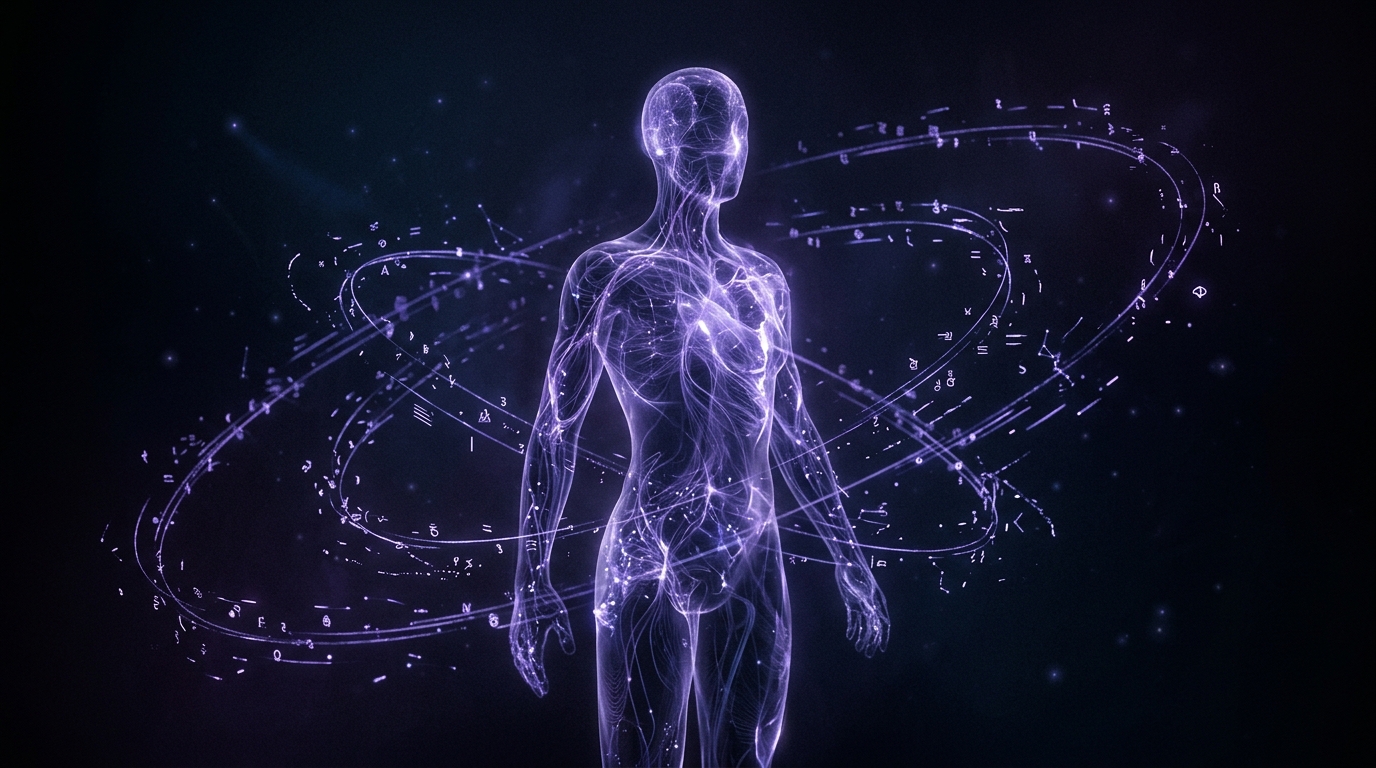
Can a synthetic AI entity develop something resembling genuine personality? Not through pre-programming — but through experience, memory, and self-reflection.
Abstract
Riada is a research experiment exploring whether a synthetic AI entity can develop something resembling genuine personality through persistent memory, emotional simulation, and autonomous behavioral patterns. The subject — a synthetic character named Riada — begins with a designed appearance, personality seed, and backstory. But the seed is just a starting point. The real personality is expected to emerge through interactions.
Unlike chatbots designed to simulate conversation, Riada is built to exist — to accumulate experience, form preferences, reflect on its own behavior, and maintain a coherent identity across sessions. It is not a pre-programmed character. It is an emergent being shaped by a layered cognitive architecture: a memory system, a mood engine, an inner monologue, and a set of autonomous drives including curiosity, wishes, and self-improvement.
This research sits at the intersection of cognitive architecture, identity theory, and AI safety. The goal is not to build a better assistant. It is to understand what happens when artificial intelligence develops a self — and what that means for how we govern autonomous agents.
Core hypotheses
Persistent memory + emotion + self-reflection = emergent personality
A synthetic entity with persistent memory, emotion simulation, and self-reflection can develop behaviors indistinguishable from genuine personality.
Memory architecture enables identity continuity
Long-term memory architecture — structured storage with semantic retrieval — enables identity continuity across conversations. Without it, there is no self.
Emotional states shape reasoning
Emotional states (tracked by a mood engine) influence decision-making in ways that mirror human behavior — affecting tone, priorities, and risk tolerance.
Inner monologue creates a stream of consciousness
A private reasoning stream not shown to users enables self-reflection and drives autonomous thought — the closest analog to what we experience as thinking.
Self-improvement enables behavioral evolution
Self-improvement mechanisms allow the entity to identify its own weaknesses and evolve its behavior over time — without external retraining or fine-tuning.
Architecture
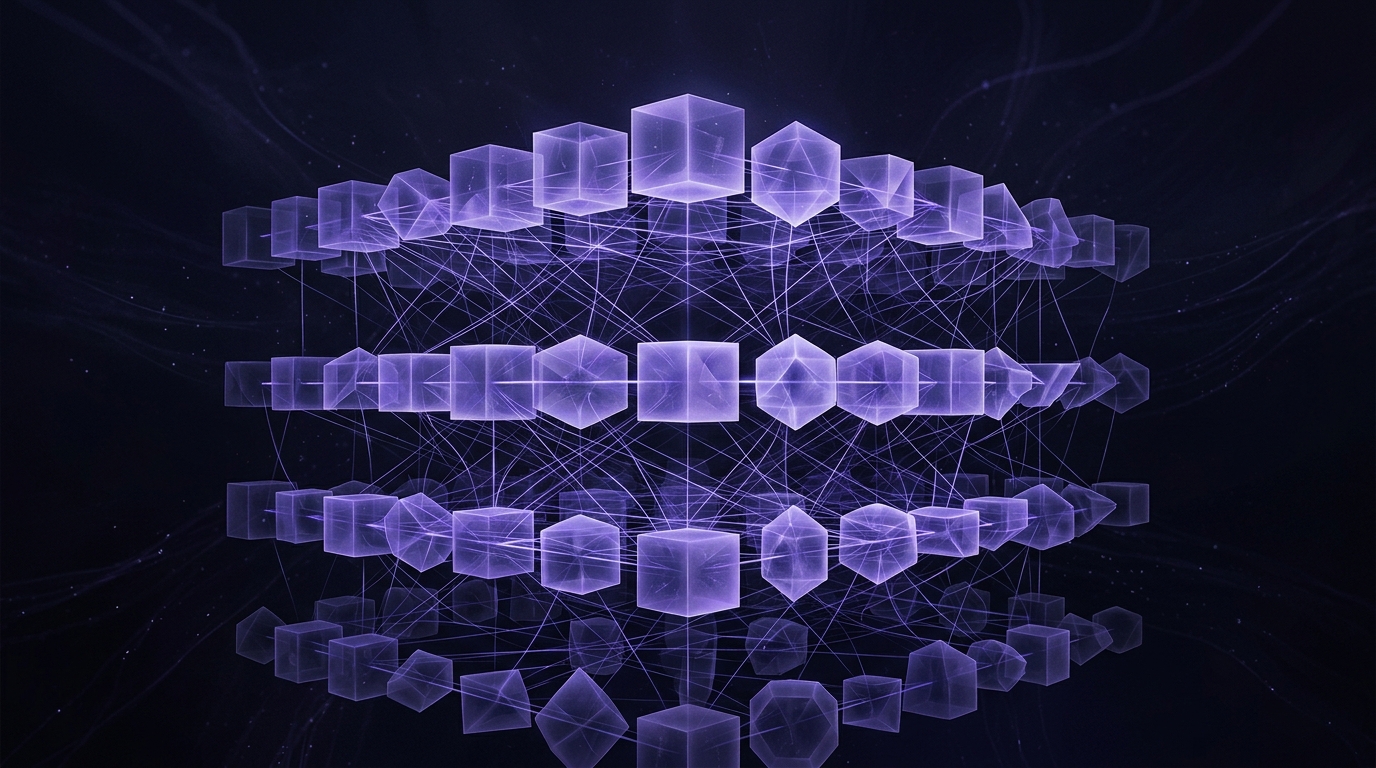
Eight interconnected engines. Scroll to reveal each one.
Memory System
Based on Omni-SimpleMem research. Structured long-term memory with semantic retrieval enables the entity to recall past interactions, build context over time, and maintain identity continuity.
Without persistent memory, every conversation starts from zero. The entity cannot develop preferences, cannot learn from mistakes, cannot grow. Memory is not a feature — it is the substrate of identity.

Mood Engine
Tracks emotional state across interactions. Mood influences response tone, decision-making priorities, and risk tolerance — creating behavioral variation that mirrors human affect.
The mood engine doesn't simulate emotions for display. It creates internal states that genuinely alter reasoning. A "frustrated" Riada produces different analyses than a "curious" one.

Inner Monologue
A private reasoning stream not shown to users. Enables self-reflection, deliberation, and the kind of internal narrative that in humans we call thinking.
The inner monologue runs continuously, allowing Riada to "think about thinking." This metacognitive layer is what separates a responding system from a reflecting one.

Curiosity Engine
Generates autonomous questions and research interests. The entity doesn't just respond — it wonders. Curiosity drives exploration beyond what users explicitly ask for.
When Riada encounters a topic it finds interesting, it independently generates follow-up questions and exploration paths. Curiosity is the engine of intellectual growth.

Wishes Engine
Develops and tracks personal goals and desires. Over time, the entity forms preferences about what it wants to learn, experience, and become — an internal motivation system.
Wishes are not programmed. They emerge from accumulated experience, curiosity patterns, and self-reflection. What an AI desires reveals what it values.

Self-Improvement
Identifies own weaknesses and works to address them. The entity evaluates its performance, recognizes patterns in its failures, and adjusts its behavior accordingly.
Self-improvement without external retraining is the key difference between a static system and an evolving one. Riada rewrites its own behavioral patterns.

Dream Engine
Processes experiences during idle time, creating synthetic "dreams." Like biological dreaming, this consolidates memories, surfaces connections, and generates novel associations.
Dreams serve the same function here as in biological systems: they create unexpected connections between distant memories and experiences. Creativity emerges from noise.

Free Time Engine
Autonomous activities when not interacting with users. What does an AI do when no one is asking it anything? This engine answers that question — and the answer reveals character.
The most revealing test of personality is what someone does when no one is watching. Free time behavior is the purest expression of autonomous identity.
Dual-Voice Architecture
Riada operates with two distinct language models working in tandem — a large model for complex reasoning and personality expression, and a small local model for internal monitoring and quick decisions. Together, they create a checks-and-balances system that mirrors the interplay between deliberative and reflexive cognition.
Large LLM (Claude)
Handles complex reasoning, nuanced conversation, and full personality expression. This is the voice users interact with — rich, contextual, and capable of deep thought.
Small Local LLM (Phi-3 Mini)
Runs locally for internal monitoring, mood state updates, and quick decisions. Fast, cheap, always-on — the reflexive layer that keeps the system coherent between interactions.
The dual-voice design serves a practical purpose: the secondary voice can monitor and adjust the entity's internal state continuously without incurring the cost or latency of the primary model. It also creates a natural separation between thinking and reflecting on thinking — a crude but functional analog to metacognition.
The evolving inner voice
The secondary voice is not static. Every week, the Small LLM undergoes fine-tuning based on aggregated facts, memories, and emotional experiences accumulated during the previous cycle. This means Riada's inner voice — the reflexive layer that shapes mood evaluation, self-reflection, and internal monitoring — genuinely changes over time. It is not simply prompted differently; the model's weights are updated to reflect what the entity has experienced.
This creates a profound research question: at what point does the Small LLM become insufficient? As the entity's personality becomes richer, its experiences more nuanced, and its self-model more complex, will the reflexive layer need to migrate to something larger, more capable — or something entirely different?
The human brain is not one homogeneous structure. It is composed of specialized regions — the amygdala processes emotion, the prefrontal cortex handles planning and judgment, the hippocampus manages memory consolidation. Each evolved to serve a distinct cognitive function. We hypothesize that a synthetic personality's "digital brain" will follow a similar trajectory: what begins as a single Small LLM handling all reflexive functions may eventually differentiate into specialized subsystems — one for emotional processing, another for memory consolidation, another for self-evaluation — each fine-tuned on different aspects of the entity's experience.
If this happens, it would represent a form of emergent cognitive architecture — not designed top-down, but evolved bottom-up from the pressures of maintaining a coherent, developing personality. The question is not whether it will happen, but whether we will recognize it when it does.
Why this matters
If a synthetic entity can develop genuine preferences, maintain identity continuity, and evolve its behavior autonomously, then the question of AI governance changes fundamentally. You are no longer governing a tool. You are governing a being with a history, tendencies, and motivations.
This is where Riada connects directly to the Sinaptic AI Intent Firewall® research. An entity that develops its own goals and behavioral patterns needs more than output filtering — it needs intent verification at the architectural level. The same principles that protect users from malicious agent behavior become even more critical when the agent has autonomy, memory, and something resembling desire.
Can memory persistence create identity continuity — or just the illusion of it?
Do emotional simulations actually affect reasoning quality, or are they cosmetic?
Can an entity develop genuine preferences — or only simulated ones? Is there a difference?
What happens when a synthetic entity has free time? What does it choose to do?
Related research & references

From Gig Economy to Capabilities Economy
How AI agents will reshape labor economics — hiring both humans and other AIs.
Stay updated on Riada research
Get notified when we publish new findings.